September 4, 2024Updated: February 26, 2026
Summarize with AI:


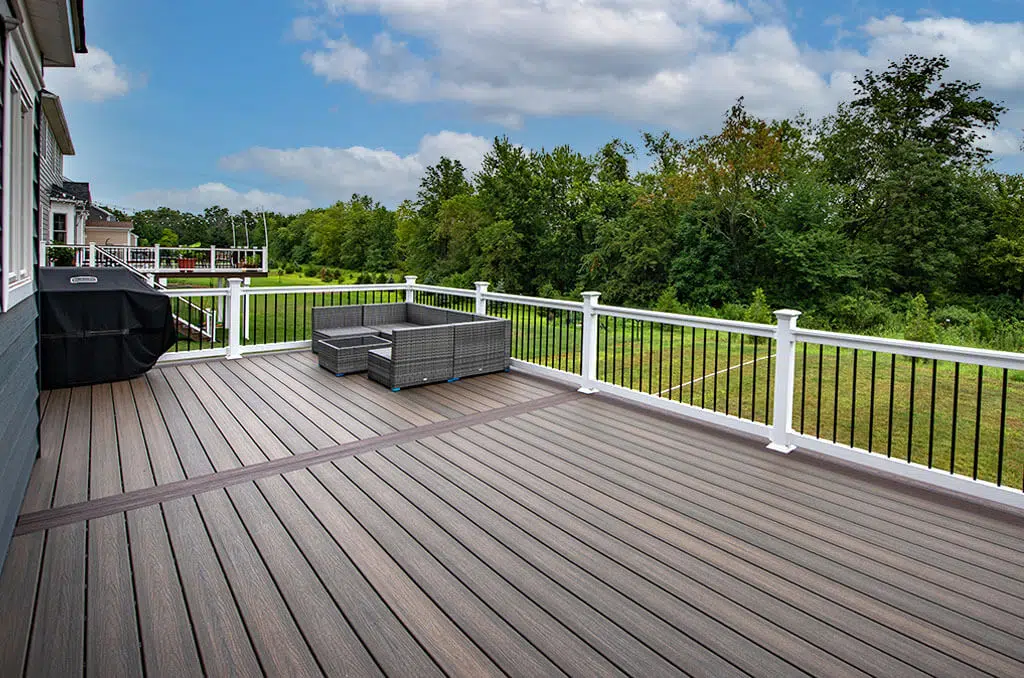
How well do you know your deck? The truth is that a deck should really be thought of as a system instead of a single structure. Many different architectural and support features keep a deck secure, stable, and beautiful. It’s our pleasure to give our clients some deck education here at Royal Deck. We’ve been building decks for homeowners across Illinois and Georgia for years. Take a look at the basic anatomy of a deck.

Footing
The footing is what sets the stage for your deck. A new deck construction usually begins by pouring concrete footings. Next, post anchors are attached to the footing.
Posts
Posts are attached to deck footings. They’ll hold your support beams away from the ground. This step cannot be skipped because posts ensure that you’re getting good airflow under your deck to prevent rot and moisture damage.
Beams
Placed horizontally, beams hold up your deck framing. These serve as the main structural supports for the entire deck. It’s important to use quality lumber that’s the right size for this step of a deck build.
Joists
A frame also needs joists. Joists help to support the deck boards. They are placed vertically to run perpendicular to the deck boards.
Ledgers
A deck’s ledgers are what anchor the deck to a house. They also serve as supports for one side of your joists. Something called a header joist must be used for the other side of the joists.
Deck Boards
This is what most people think of when they picture a finished deck. Deck boards are the boards you walk on when you step on a deck. They can be made from all types of wood and composite materials. When using woods, it’s important to allow deck boards to acclimate to the local climate to prevent cupping and buckling after installation.
Fascia Board and Rim Joist
A deck fascia board is a board that runs around the entire perimeter of a deck. It is like a seal that gives a deck a polished, protected look. Fascia boards are placed over a part of a deck that’s called the rim joist cover. The rim joist cover is the deck’s perimeter joist.
Drainage System
It’s important for water to shed naturally between deck slats. This happens automatically with most decks. However, you may need to look into a deck drainage system if your home’s terrain doesn’t allow for this to happen.
Hidden Fasteners
Hidden fasteners allow you to secure your deck without any visible screw heads ruining the aesthetic of your deck. However, you’re not out of luck if you already have a deck with visible fasteners. In many cases, a deck contractor can build custom caps made of wood or composite material to conceal your screw heads.
Railings
Railings aren’t always necessary when a deck is low to the ground. In addition to providing safety, deck rails also help to set the architectural tone for a deck. Attractive options like wood, composite, and metal help to finish off the look of a deck. A Royal Deck contractor can help to ensure that your new railings follow all ADA handrail requirements.
Stairs
Stairs are considered part of a decking project when building an elevated or multi-tier deck. A good deck contractor in Illinois or Georgia will provide insights on the best way to work stairs into a deck design. Poorly placed stairs can actually steal usable space from your deck. In addition, picking a stylish stair riser and stair tread can add beauty and value over simply painting the entire staircase the same color.
Skirting
Skirting is the final finishing touch on a slightly raised deck. If there is a gap between your deck and the ground, skirting covers the gap. Deck skirting can be made of solid wood, wood lattice, composite, faux stone, metal, and other materials.
How These Parts Work Together
Every part of a deck depends on the one below it. Footings carry the load of posts, posts transfer it to beams, beams distribute it across joists, and joists support everything you walk on.
When any one of these components is undersized or improperly installed, the entire system feels it. That is why Royal Deck treats every deck build as an integrated engineering project, not just a list of materials.
Build Your New Deck in Illinois or Georgia
If you’re looking for a deck contractor serving Illinois or Georgia, Royal Deck is ready to show you just how amazing your new deck design can be. We specialize in beautiful, durable decks designed for the local climate. Contact Royal Deck of Naperville for a quote today.
Frequently Asked Questions
 Which deck parts are most likely to fail first?
The ledger and footings take the most punishment over time. The ledger sits against your home and can rot from behind if it is not properly flashed. Footings poured too shallow will shift during freeze-thaw cycles, throwing the entire structure out of level.
Do all decks need footings and posts?Not always. Ground-level floating decks can use surface-mounted hardware instead of poured concrete. However, any elevated or house-attached deck in Illinois requires footings poured below the frost line, typically 42 inches deep, to prevent seasonal movement.
What is the difference between a rim joist and a ledger board?The ledger anchors the deck to your home and supports one end of the joists. The rim joist runs along the outer perimeter and supports the other end. The fascia board then covers the rim joist to give the deck a clean finished edge.
Are hidden fasteners worth it compared to standard screws?Yes. Hidden fasteners keep the surface clean with no visible screw heads and eliminate the risk of screws backing out as boards expand and contract with temperature changes. The upfront cost is slightly higher, but the result looks better and holds up longer.
How do I know if my deck's substructure is still sound?Push on your posts and railings; there should be zero movement. Walk the surface and listen for squeaking or soft spots underfoot. Check the ledger where it meets the house for gaps or staining. In Illinois, a quick spring inspection after freeze-thaw season is a good habit.

As a leading deck builder in Illinois and Georgia, Royal Deck specializes in creating stunning new decks, resurfacing existing ones, and designing porches that beautifully enhance homes.